
Key Takeaways
Start with distance and elevation, not “scenery ratings.” A trail marked “easy” on a tourism site can still mean 3.5 miles of exposed desert above 4,500 ft — and 105°F in July is not negotiable. Filter by miles (≤4 round-trip) and elevation gain (≤400 ft) first, then pick the pretty one.
Carry more water than you think: 0.5L per mile is the minimum in Sedona’s heat — 1L per mile is smarter from May through September. Most beginner-friendly trails in Sedona run 2–4 miles round-trip, meaning you need 1–4L before you even factor in temperature, pace, or exposure.
Trailhead parking fills by 8:00 AM on weekends, year-round. Arrive before 7:30 AM or plan a shuttle from Uptown Sedona — the Red Rock Pass ($7/day or $15/week) is required at most trailheads and is not optional. Rangers do ticket.
The “Big 4” beginner trails — Bell Rock Pathway, Airport Mesa Loop, Soldier Pass, and Broken Arrow — cover different landscapes (vortex sites, panoramic mesas, sinkholes, and slickrock) and range from 1.6 to 4.0 miles. Match the trail to the person, not the Instagram photo.
Heat kills faster than elevation does. Sedona sits at 4,326 ft, which is high enough to confuse visitors from sea level, but not high enough to cool the desert floor in summer. Ground-level temperatures on exposed red rock can exceed 140°F — plan your hike before 9 AM or after 4 PM from May through October.
Monsoon season (July–September) turns dry trails into flash flood zones in under 15 minutes. Check the National Weather Service forecast the morning of your hike, not the night before. If storms are within 20 miles, stay off slot canyons, creek beds, and exposed ridgelines.
Trailhead difficulty ratings use a different scale than what most beginners expect. In Sedona, “moderate” often means 600+ ft of elevation gain on loose red rock — if you’re new to hiking or coming from a flat-state background, treat Sedona’s “easy” as your moderate and plan accordingly.
Footwear matters more in Sedona than almost anywhere else in Arizona. Red rock surfaces are deceptively loose and angled — trail runners or low hiking shoes with actual grip are the minimum. Flip-flops, Converse, or smooth-soled shoes are how people end up sliding off slickrock and calling search and rescue.
Why Sedona Trails Hit Different for Beginners — and Why Arizona’s Heat Changes Everything
Sedona is genuinely one of the most beginner-accessible hiking destinations in the American Southwest. That’s not marketing copy — it’s a function of geography. Unlike the Grand Canyon (where getting to the views requires serious mileage and thousands of feet of descent) or Havasupai (10-mile one-way with permit lottery), Sedona puts world-class red rock scenery within 1–2 miles of well-marked trailheads. Bell Rock is visible from the highway. Cathedral Rock is a 15-minute drive from downtown. Airport Mesa gives you a 360-degree panorama on a paved-grade loop.
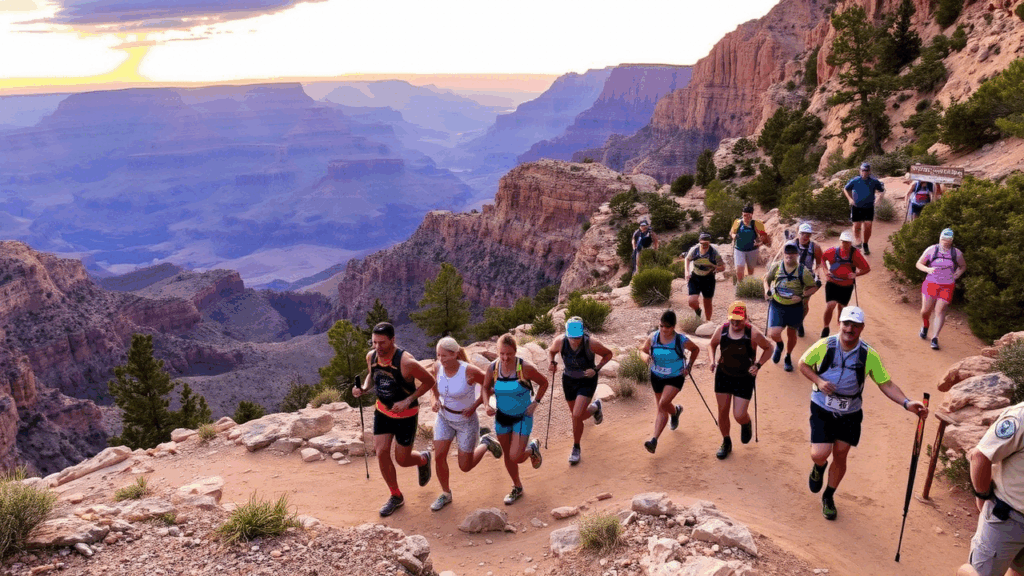
Here’s the key part: that accessibility is also what makes Sedona dangerous for unprepared beginners. Because the trailheads feel so approachable — parking lots with bathrooms, paved first 100 yards, Instagram-worthy views in under a mile — people underestimate what comes after the easy part. Sedona rescue teams perform hundreds of rescues every year, and the majority involve dehydration, heat exhaustion, or twisted ankles from footwear that belongs at brunch, not on red rock.
The Arizona heat context is not background information here. It’s the variable that changes every single decision you make about when to hike, what to bring, and when to turn around. Phoenix sits at 1,117 ft elevation and routinely hits 115°F in summer. Sedona at 4,326 ft is cooler — high temperatures typically run 95–103°F from June through August — but the red rock amplifies radiant heat, exposed sections of trail offer zero shade, and most beginner-level trails run between 1,500 and 3,500 ft in elevation, meaning you’re not getting significant alpine cooling.
Monsoon season (typically July 1 through September 30) adds a complicating layer. Arizona’s monsoon is not a “rainy season” in the Pacific Northwest sense — it’s a pattern of intense, fast-moving thunderstorms that can drop 1–3 inches of rain in under an hour on specific areas while leaving a trail 5 miles away bone-dry. The danger for hikers isn’t getting wet. It’s flash flooding in canyon areas, lightning exposure on ridgelines, and trail surfaces that go from solid to slick mud within minutes. None of this makes Sedona off-limits in monsoon season — it makes it a place that requires a weather check, not an assumption.
The important detail for beginners is this: Sedona rewards people who plan like a boring, reliable machine. Check the weather. Park early. Carry extra water. Start before 9 AM. Tell someone where you’re going. The trails themselves are genuinely beautiful and well-maintained. The preparation is what separates the people who love it from the people who end up in a ranger’s truck.
This guide covers the best beginner-friendly trails in Sedona with actual data — miles, elevation gain, estimated time, parking notes, and specific safety considerations. Not vague “the views are stunning” content. If you want to know exactly what to expect on Bell Rock at 8 AM in August, you’re in the right place.
Step-by-Step Trail Guide & Checklist
The trails below are organized from most beginner-accessible to slightly more demanding (but still appropriate for healthy adults with no prior hiking experience). Every trail listed has been selected based on four criteria: round-trip distance under 5 miles, elevation gain under 500 ft, well-marked trail, and established trailhead with parking.
Trail 1: Bell Rock Pathway
Distance: 3.6 miles round-trip (full loop to Bell Rock and back)
Elevation Gain: 175 ft
Estimated Time: 1.5–2.5 hours
Difficulty: Easy
Trailhead: Bell Rock Trailhead, 39 Bell Rock Blvd, Village of Oak Creek, AZ 86351
Red Rock Pass Required: Yes ($7/day)
Best Season: October–April (doable year-round with early start in summer)
Bell Rock Pathway is the single most beginner-friendly trail in Sedona that still delivers full red rock drama. The path runs mostly flat along the base of Bell Rock and Courthouse Butte — two of the most photographed formations in all of Arizona — on a well-graded, wide trail that reads almost like a gravel road for the first mile.
Here’s the key part: “easy” on this trail really means easy. At 175 ft of total elevation gain over 3.6 miles, the grade is gentle enough that most people don’t register it as a climb. The trail surface is compacted red dirt and gravel with clear markings, and there are no exposed ledges or technical sections on the main pathway.
What beginners get wrong on Bell Rock is two things: they underestimate how exposed the trail is (zero tree shade on the southern half of the loop, which becomes a problem above 9 AM from April through October) and they attempt to scramble up the rock formation itself without realizing that what starts as a casual “let’s go a little higher” becomes genuinely technical within 50 feet. The base loop? Appropriate for all fitness levels. The scramble up the bell? A different hike entirely.
Practical tip: Walk the loop counterclockwise (right at the trailhead fork). This puts the most dramatic rock views in front of you early, and the return leg runs slightly more shaded. Bring at least 1.5L of water per person for the full loop.
Safety note: If the parking lot is full when you arrive, don’t park on SR-179 shoulders — it’s illegal and you will be ticketed. Drive north to the Courthouse Vista parking area (0.5 miles) and walk south to connect.
What to expect at the trailhead: Pit toilets are available. No water spigots at the trailhead — arrive with your water already filled. Cell service is generally good here for an emergency.
Trail 2: Airport Mesa Loop
Distance: 3.2 miles (full loop)
Elevation Gain: 255 ft
Estimated Time: 1.5–2 hours
Difficulty: Easy–Moderate
Trailhead: Airport Mesa Trailhead, Airport Rd, Sedona, AZ 86336
Red Rock Pass Required: Yes
Best Season: Year-round (sunrise/sunset are the prime windows)
Airport Mesa Loop sits on the flat-topped mesa above downtown Sedona and gives you one of the only 360-degree panoramic views in the entire area that beginners can access without technical climbing. You see the entire Sedona valley — Cathedral Rock to the south, the Mogollon Rim to the north, Oak Creek Canyon winding toward Flagstaff, and the entire downtown corridor below you.
The important detail for beginners is that this trail has two distinct personalities depending on which direction you walk. The western ridge is wider, more gradual, and forgiving. The eastern section narrows to a rocky spine in a few spots and involves one short scramble section (maybe 20 ft) that can feel exposed if you’re uncomfortable with heights. Neither section is dangerous for a healthy, attentive adult — but it’s worth knowing before you’re standing on a 3-foot wide ledge and realizing you have to either go forward or go back.
Practical tip: Arrive before 7 AM for sunrise — this is legitimately one of the best sunrise spots in Sedona, the colors on the red rocks at first light are something you can’t manufacture in editing software, and the parking lot has room. After 8 AM on weekends, the small Airport Mesa lot fills fast and overflow becomes a real logistics problem.
Safety note: The mesa is fully exposed. Wind can be significant, especially in winter and spring. April through May is particularly gusty — bring a layer even if the temperature looks mild.
What to expect: There’s a small fee parking area near the top of Airport Road. Restrooms are not available at the trailhead. The initial climb from the parking lot to the loop is 10–15 minutes and the steepest part of the entire hike.
Trail 3: Soldier Pass Trail
Distance: 4.0 miles round-trip
Elevation Gain: 365 ft
Estimated Time: 2–3 hours
Difficulty: Easy–Moderate
Trailhead: Soldier Pass Trailhead, Soldier Pass Rd, Sedona, AZ 86336
Red Rock Pass Required: Yes
Parking Note: Very limited — 8 spaces maximum. Arrive before 7:30 AM or take the Sedona Shuttle from Uptown
Best Season: October–May (hot and exposed in summer midday)
Soldier Pass is the trail where Sedona starts showing its geological weirdness, and beginners love it for that reason. Within the first 0.8 miles, you pass three distinct geological features: the Seven Sacred Pools (a series of natural rock basins that fill with water during monsoon season and hold water into winter), the Devil’s Kitchen sinkhole (a 100-ft wide, 65-ft deep collapse into an underground cave system), and red rock formations that read like a natural amphitheater.
Here’s the key part: the parking situation at Soldier Pass is the single biggest logistical challenge of the trail. The lot holds 8 cars — that’s not a typo. On weekends from October through April (peak season), that lot is full by 7:15 AM, and there is nowhere nearby to park legally. The Sedona Shuttle runs a stop to Soldier Pass and is genuinely the smart move for anyone visiting on a Saturday or Sunday.
The trail itself is manageable for most beginners. The first mile is well-graded and wide. Between mile 1.0 and 1.5, the trail climbs a series of natural sandstone steps — still not technical, but requiring some attention to footing. The Seven Sacred Pools are at mile 0.4 and are worth lingering at, especially if you visit after recent rain when the basins are full.
Practical tip: The Devil’s Kitchen sinkhole has a viewing barrier — don’t lean on it or attempt to enter. The sinkhole is an active geological feature, meaning the edges are not stable and the cave below is not mapped for recreation.
Safety note: After monsoon rains, the Seven Sacred Pools can be slippery and partially submerged. The pools look shallow and inviting. They’re slicker than they look. Wear shoes with grip.
What to expect: No restrooms at this trailhead. The trail is one of the better-shaded options in Sedona due to juniper and pinyon pine cover in the first mile.
Trail 4: Cathedral Rock Trail
Distance: 1.5 miles round-trip (to the saddle)
Elevation Gain: 718 ft
Estimated Time: 1.5–2.5 hours
Difficulty: Moderate (included here because the views are unmatched and it’s short)
Trailhead: Back O’Beyond Trailhead, Back O’Beyond Rd, Sedona, AZ 86336
Red Rock Pass Required: Yes
Best Season: October–April; early morning start mandatory in summer
Important caveat: At 718 ft of gain in 0.75 miles, this is the most demanding trail in this guide. Fit beginners handle it fine — but read the safety note.
Cathedral Rock is Sedona’s signature image. The twin spires appearing in more photography, paintings, and travel media than any other formation in Arizona. The trail to the saddle between those spires is short (0.75 miles one-way), but it climbs 718 feet — which means you’re gaining almost 1,000 ft per mile in the steepest sections. The trail surface transitions from compacted dirt to natural red rock to a scramble section requiring hands and feet over the final 0.2 miles.
The important detail: this is categorized as “moderate” on the US Forest Service trail system, but in real-world beginner terms, it’s the hardest trail in this guide. If you’ve never hiked before, if you have significant knee issues, or if you’re hiking with children under 10, come back to Cathedral Rock after you’ve done Bell Rock and Soldier Pass first. Get comfortable on red rock, then work up to this one.
Here’s the key part: the saddle view at Cathedral Rock — looking southeast over Oak Creek and the Verde Valley with the twin spires framing the sky — is one of the most rewarding views accessible to beginners anywhere in the Southwest. The difficulty is real, but so is the payoff. Fit beginners who take their time on the scramble section report it as the highlight of their Sedona trip, consistently.
Practical tip: The scramble section (final 0.2 miles) has cairns (rock stacks) marking the route. Follow them. Do not improvise an alternate line up the rock face — the surface looks solid and grippy and is often not. Descend the scramble facing the rock (backward), not forward.
Safety note: This trail has the highest concentration of ankle and knee injuries of any beginner-accessible trail in Sedona. The descent on loose red rock with tired legs is where most of them happen. Budget extra time for the descent — minimum 45 minutes down from the saddle.
What to expect: The trailhead has a small parking lot (fills by 7:30 AM on weekends). Restrooms are available. The first 0.4 miles are a maintained gravel path — then it becomes trail, then scramble.
Trail 5: Broken Arrow Trail
Distance: 2.8 miles round-trip
Elevation Gain: 390 ft
Estimated Time: 1.5–2.5 hours
Difficulty: Easy–Moderate
Trailhead: Broken Arrow Trailhead, Morgan Rd, Sedona, AZ 86351
Red Rock Pass Required: Yes
Best Season: Year-round; Chicken Point (the highlight) is exposed — morning preferred in summer
Broken Arrow is Sedona’s slickrock playground for beginners. The trail winds through a canyon-floor approach and then climbs out onto Chicken Point — a broad, flat shelf of red sandstone with 270-degree views over the surrounding canyon system. The exposure at Chicken Point is significant in the best possible way: you’re standing on open rock with nothing above you and Sedona’s red walls on every side.
Here’s the key part: Broken Arrow also hosts Jeep tours that run the same route on a parallel ATV/Jeep road. You’ll hear them — they’re not subtle. The hiking trail is separated from the vehicle route at most points, but there are two short shared-use crossings. Yield to the Jeeps, they move slowly but they’re large.
The trail surface on Broken Arrow involves more natural rock navigation than Bell Rock or Soldier Pass. The canyon approach has some loose rock sections, and the climb to Chicken Point uses a series of natural rock shelves. None of it is technical, but all of it rewards paying attention to your feet.
Practical tip: The Submarine Rock formation is a worthwhile short detour off the main trail (add 0.4 miles). It’s an easy scramble to the top of a rounded rock fin with views in three directions. Better than it sounds on the map.
Safety note: Chicken Point’s edge is a cliff. The rock surface near the edge appears solid and has no barrier. Keep children close. It’s one of those places where the edge looks obvious from 20 feet away and suddenly isn’t obvious when you’re looking at the view.
What to expect: Parking at the Broken Arrow trailhead is limited. The lot is small and shared with the Jeep tour staging area. Arrive before 8 AM on weekends.
Trail 6: Fay Canyon Trail
Distance: 2.4 miles round-trip
Elevation Gain: 215 ft
Estimated Time: 1–1.5 hours
Difficulty: Easy
Trailhead: Fay Canyon Trailhead, Boynton Pass Rd, Sedona, AZ 86336
Red Rock Pass Required: Yes
Best Season: Year-round; one of the best-shaded beginner options in Sedona
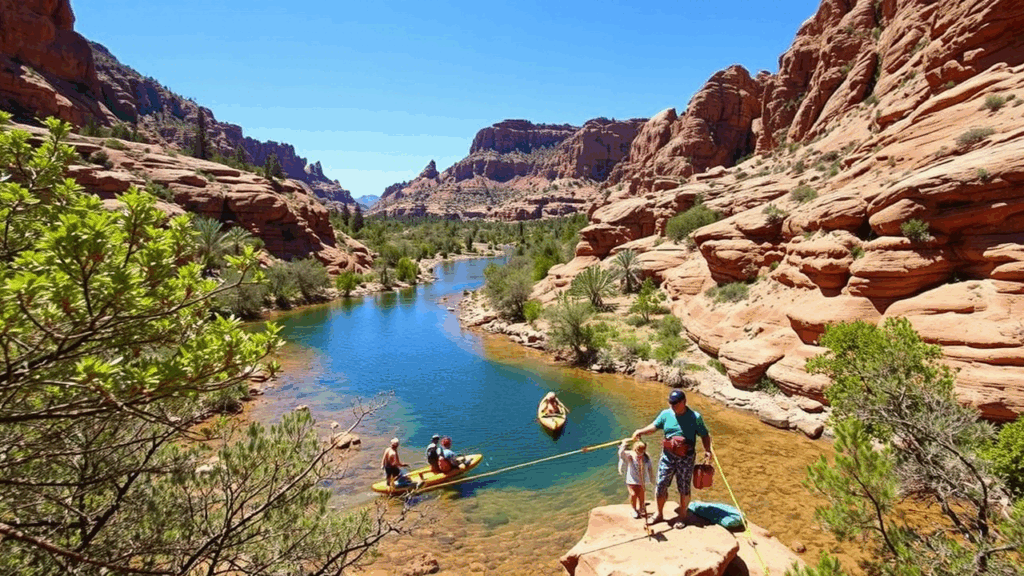
Fay Canyon is the beginner trail that feels least like a “tourist attraction” and most like a genuine canyon hike. The trail runs through a narrow red rock canyon with canyon walls rising 200–400 ft on both sides, a sandy wash floor, and overhead coverage from the canyon walls that shades most of the trail until mid-morning. Cottonwood and Arizona sycamore trees line the canyon bottom — it looks and feels completely different from the open mesa trails.
The important detail: Fay Canyon has a hidden scramble option at the end that most visitors miss. At the end of the maintained trail (mile 1.2 from the trailhead), a cairn-marked use trail climbs left up the canyon wall to a natural arch. The arch scramble adds 0.4 miles round-trip and about 150 ft of gain. It’s worth doing and appropriate for most beginners who are comfortable on loose rock.
Practical tip: This trail is significantly cooler than exposed trails like Airport Mesa or Bell Rock — a real asset in summer. If you’re visiting June through August and need to hike after 9 AM, Fay Canyon is one of your best options.
Safety note: The canyon wash can hold standing water after rain. The sandy floor becomes soft and slows progress in spots. Not dangerous, but slower than you’d expect.
What to expect: Restrooms at the trailhead. Moderate-sized parking lot. Less crowded than Bell Rock or Cathedral Rock, making it a good option for weekday-level traffic on a weekend.
Trail 7: Vultee Arch Trail
Distance: 3.8 miles round-trip
Elevation Gain: 490 ft
Estimated Time: 2–3 hours
Difficulty: Moderate
Trailhead: Sterling Pass Trailhead, SR-89A (mile marker 380), Oak Creek Canyon
Red Rock Pass Required: Yes
Best Season: Year-round; Oak Creek Canyon provides natural shade — one of the cooler options
Vultee Arch sits in Oak Creek Canyon — the dramatic gorge that connects Sedona to Flagstaff along SR-89A — and it’s the most canyon-immersive beginner hike in this guide. The trail climbs Sterling Canyon alongside a seasonal creek (running in winter and spring, intermittent in summer), through ponderosa pine and oak forest, to a viewpoint above a 40-ft natural arch of red sandstone.
Here’s the key part: this trail feels different from the red rock mesa trails because it’s forested. The canyon walls block direct sun for much of the route, the creek adds humidity and a sound element missing from drier desert trails, and the forest floor smells like a completely different Arizona. Beginners who aren’t sure they like desert hiking often find Vultee Arch the most immediately comfortable option.
At 490 ft of gain over 1.9 miles one-way, the elevation is spread across the entire trail without dramatic steep sections. The surface is a mix of compacted dirt and rock with good traction in dry conditions.
Practical tip: Check Oak Creek creek levels before visiting in late winter or early spring — the trail crosses the creek bed, and high water from snowmelt can make the crossing impractical without getting your feet wet.
Safety note: This trailhead is on SR-89A, which is a busy two-lane highway through Oak Creek Canyon. Use the pullout parking and look both ways carefully. The road sees high-speed traffic.
What to expect: No restrooms at this trailhead. Small pullout parking for 8–10 vehicles. Less congested than Sedona proper because it requires driving the canyon road.
Trail 8: West Fork Trail (Oak Creek Canyon)
Distance: 6.4 miles round-trip (full out-and-back); most beginners do 3.0 miles round-trip
Elevation Gain: 200 ft (negligible — the trail follows a creek canyon floor)
Estimated Time: 1.5–4 hours depending on distance
Difficulty: Easy
Trailhead: West Fork Trailhead, SR-89A mile marker 384.5
Red Rock Pass Required: Yes ($7/day or use America the Beautiful Pass)
Best Season: April–October; spectacular fall foliage in October–November
Note: Trail involves multiple creek crossings — wet feet are expected
West Fork is the canyon hiking experience in northern Arizona. The trail follows a slot canyon creek — West Fork of Oak Creek — through some of the most dramatic narrows accessible on foot in the entire state. Canyon walls rise 200–400 ft directly overhead, the creek runs through the canyon floor, deciduous trees create a canopy in spring and summer, and the light on the red rock walls shifts constantly as the canyon bends.
The important detail: this is one of the few Arizona beginner trails where you will get your feet wet and it’s completely expected and appropriate. The trail crosses West Fork creek multiple times (10–13 crossings depending on water level and route-finding), and there are no footbridges. In low water (late summer), crossings are ankle-deep. In spring snowmelt, they can reach knee-depth. Water sandals or trail runners you don’t mind soaking are the right footwear.
Here’s the key part: at 200 ft of total elevation gain for the full 6.4-mile round-trip, this is one of the flattest “hikes” in Sedona — it’s essentially a canyon walk. The challenge isn’t elevation. It’s distance, rock-hopping footing across creek beds, and the occasional wet crossing. Most visitors turn around at 1.5 miles (the canyon narrows are the highlight) and that’s a perfectly satisfying 3.0-mile round-trip.
Practical tip: October is magical here. The deciduous trees — Arizona sycamore, bigtooth maple, Fremont cottonwood — turn gold and orange against the red rock walls. It’s the most photographed fall foliage location in Arizona and the parking situation reflects that: arrive by 7:00 AM in October on weekends.
Safety note: Flash flooding risk is higher in West Fork than most Sedona trails because the canyon walls are close and there’s nowhere to go if water rises rapidly. Check the morning forecast. Do not enter if storms are within 20 miles of Oak Creek Canyon.
What to expect: Parking area has restrooms and a small fee station. The first 0.6 miles follows a maintained path past historic ranch ruins before entering the creek canyon. No cell service inside the canyon.
Gear & Safety Checklist for Sedona Beginners
The Non-Negotiables (Every Hike, Every Season)
- Water: Minimum 0.5L per mile. For summer (May–September), carry 1L per mile. A 3-mile round-trip hike in July requires at least 3L per person — more if you sweat heavily or hike with children. Don’t plan on water at trailheads. None is available.
- Footwear: Trail runners or low hiking shoes with lugged (grippy) rubber soles. Red rock is sandpaper-rough in places and polished-slick in others. Flip-flops, sneakers, and Birkenstocks belong at the coffee shop, not on slickrock.
- Sun protection: Sunscreen (SPF 30 minimum, reapply every 90 minutes), UV-protective clothing or long sleeves, sunglasses with UV protection, and a hat with a brim. Sedona sits at 4,326 ft — UV intensity is significantly higher than at sea level and the red rock acts as a reflective surface.
- Red Rock Pass: $7/day, $15/week, available at trailhead fee stations or online at www.fs.usda.gov/coconino. Enforcement is real. Rangers issue tickets.
- Phone with downloaded offline maps: Cell service is intermittent on many Sedona trails. Download the area maps in AllTrails, Gaia GPS, or Avenza Maps before you leave the car. Knowing you can view your GPS track offline has ended more than a few “are we lost?” conversations.
- Snacks/food: Any hike over 2 hours warrants calories — 200–300 calories per hour of hiking. Trail mix, bars, nuts. Not heavy, not perishable.
- Basic first aid: Blister bandages, moleskin, ibuprofen, a small ACE wrap, and adhesive bandages. Most beginner-trail incidents involve blisters and twisted ankles — both are manageable with minimal kit.
Summer-Specific Additions (May 1 – September 30)
- Electrolytes: Water alone doesn’t replace what you lose sweating in desert heat. Electrolyte tablets or powder (Liquid IV, Nuun, LMNT) added to your water prevent hyponatremia — a real risk when hikers drink large amounts of plain water without replenishing sodium.
- Extra water beyond what you think you need: If you calculated 2L, bring 3L. The extra weight (about 2.2 lbs per extra liter) is worth the margin.
- Start time: On the trail before 7:00 AM. Off the trail or in shade by 10:30 AM. The 9 AM–12 PM window in summer is when heat exhaustion incidents spike.
- Emergency mylar blanket: Lightweight ($2) and can reduce heat absorption if you need to stop and rest in sun. Also doubles as a signaling mirror if needed.
Monsoon Season Additions (July 1 – September 30)
- Weather check (morning of): National Weather Service forecast for Sedona (weather.gov — search “Sedona AZ”). Look specifically at the hourly forecast for afternoon hours and check the radar for convective activity. If there are storm cells within 20 miles by 1 PM, change your plan.
- Rain jacket or poncho: Monsoon rain is intense and brief. A packable rain jacket weighs 6 oz and keeps you hiking. It also keeps you from getting hypothermic when 102°F drops to 75°F in 20 minutes after a storm.
- Mental commitment to turning back: Flash flooding sounds dramatic and distant until you’re in a canyon and you hear the rumble. Establish a turnaround trigger before you start: “If I see lightning or hear thunder, we turn around immediately.” No negotiating with the sky.
What Not to Bring (or Do)
- Pets without significant water carrying capacity — most Sedona trails have no water sources and pavement and rock surfaces at ground level are hot enough to burn paws in summer
- Glass bottles at trailheads (several areas prohibit)
- Alcohol on the trail — heat + alcohol = dehydration that accelerates dangerously
- Children in carriers/strollers on technical scramble trails (Bell Rock path is fine; Cathedral Rock scramble section is not)
- External Bluetooth speakers — other hikers can hear them from 0.5 miles. Please, no.
Planning Your Hike: Step-by-Step Checklist
Follow this in order. It sounds like a lot until the first time it saves you from a 4-mile miserable slog or a parking disaster.
2–7 days before:
- Confirm which trail you’re doing — verify miles, elevation gain, and trailhead address (put the specific trailhead in your GPS, not just “Sedona”)
- Check if the trail requires advance reservation (some Sedona trailheads have switched to timed-entry permits — verify current status at fs.usda.gov/coconino)
- Download offline maps for the trail in AllTrails or Gaia GPS
- Check if Red Rock Pass is included in your lodging or if you need to purchase
The night before: 5. Fill all water bottles and hydration bladder — full, not “I’ll fill them in the morning” 6. Pack your bag: water, snacks, sunscreen, hat, first aid, phone charger for the car ride 7. Set your alarm for a real early start — arriving at the trailhead after 8:30 AM on weekends means parking chaos
Morning of: 8. Check the National Weather Service forecast — specifically the hourly for your hike time window and radar for storm cells (critical in monsoon season July–September) 9. Apply sunscreen before you leave the car 10. Take a photo of the trailhead map board (paper backup if phone dies) 11. Tell someone your plan: which trail, expected return time, who to call if you don’t check in by X
On the trail: 12. Start your AllTrails or GPS tracker 13. Drink water before you feel thirsty — thirst is a lag indicator, not a real-time readout 14. Check the time and water level at the halfway point. If you’re using water faster than planned, turn around 15. Take the descent seriously — that’s when most ankle injuries happen, not the climb
After: 16. Rinse shoes to prevent tracking seeds and soil into other trail systems (an actual conservation request from US Forest Service) 17. Log your hike and rate trail conditions in AllTrails — helps other beginners know what’s current
Sedona Hiking FAQ
Is Sedona hiking safe for complete beginners with no prior experience?
Sedona is safe for beginners on the right trails with the right preparation — and genuinely risky on the wrong trails without it. That’s a more nuanced answer than most travel sites give, but it’s accurate.
The trails in this guide were selected because they meet the realistic capability of most healthy adults with no hiking background. Bell Rock Pathway at 3.6 miles and 175 ft of elevation gain is the kind of trail that fitness-level tourists, older adults, and families with young children complete comfortably every day. West Fork Trail’s 3.0-mile beginner version is essentially flat canyon walking with creek crossings. Airport Mesa Loop has one brief rough section that gets attention but doesn’t require any technical skill.
Here’s the key part: the danger in Sedona for beginners isn’t the trail difficulty rating. It’s the environmental conditions that don’t change based on how experienced you are. Heat is heat. The sun doesn’t moderate because it’s your first hike. Dehydration progresses at the same rate whether you’ve logged 200 AllTrails hikes or zero. The single highest-impact decision you make as a beginner in Sedona is when you start hiking — before 8 AM from May through October eliminates most of the heat-related risk window before it opens.
If you’re a complete beginner, start with Bell Rock Pathway or Fay Canyon. Both are forgiving on terrain, well-marked, and have good emergency access. Add West Fork if the idea of canyon walking sounds better than rock scrambling. Work up to Cathedral Rock after you’ve done two or three easier hikes and you know how your body handles the desert environment.
One practical benchmark: if you can walk 3–4 miles on flat ground at a normal pace without stopping to rest, you can comfortably complete Bell Rock, Airport Mesa, Soldier Pass, Broken Arrow, or Fay Canyon. If 3 miles is a stretch, start with Bell Rock’s 1.5-mile out-and-back to the rock’s base (not the full loop) and build from there.
What is the best time of year to hike in Sedona as a beginner?
October through April is the ideal window for beginner hiking in Sedona — specifically November through March if you want genuinely comfortable temperatures and minimal crowds on trails. That window gives you highs in the 55–70°F range, low UV intensity compared to summer, and stable weather without monsoon risk. The trails are as good as they get: firm surface, great visibility, comfortable pace at any hour.
The important detail is that Sedona’s peak tourist season runs October through May, and trail crowding peaks in March and April. Bell Rock and Cathedral Rock can feel like outdoor theme parks on a Saturday in April. If you value quiet, aim for weekday hikes or the January–February shoulder window.
May and early June are transitional: temperatures are rising (highs reach 85–95°F in May, 100°F by mid-June) but monsoon hasn’t started yet. Hiking is absolutely doable with an early start — 6:00–6:30 AM on the trail — but the margin for error on hydration and timing shrinks significantly.
July through September (monsoon season) requires the most preparation. Temperatures in Sedona mid-summer run 95–103°F during the day with monsoon storms developing most afternoons between 12 PM and 5 PM. Hiking is possible — and Sedona is actually stunning after a monsoon storm, with waterfalls running and the red rock saturated and vivid — but it requires disciplined early starts (on the trail by 6:30 AM, off by 10:00 AM) and a hard commitment to weather monitoring.
Here’s the key part for beginners deciding when to visit: if you have flexibility in your travel dates, October or November gives you the best combination of comfortable temperatures, stable weather, and reasonable crowds. March and April give you the same comfortable hiking with more crowds but also more green vegetation after winter rains. If summer is your only option, go early, go fast, go home before noon.
How much water should I bring on a Sedona hike?
The honest answer: more than the trail’s mileage alone would suggest, and more than you’d carry for an equivalent hike anywhere in a temperate climate.
Start with the baseline formula: 0.5L per mile of hiking in cool weather (below 75°F). That means a 4-mile round-trip hike in October needs 2L per person minimum. In hot weather — May through September, which covers most of Sedona’s peak hiking season for visitors — scale to 1L per mile. That same 4-mile hike now requires 4L per person.
Here’s the key part: those numbers are minimums for a healthy adult hiking at a moderate pace in shade-available conditions. Sedona’s beginner trails are largely exposed, meaning you’re hiking in direct sun on radiant rock for significant portions of most routes. Add 25–50% to your baseline calculation for sun exposure. Add more if you’re hiking with children (their body temperature regulation is less efficient), if you sweat heavily, or if you know you’re coming from a humid climate where you’re not acclimated to dry-heat sweat rates.
The symptom timeline matters too. In Arizona desert heat, dehydration moves faster than most people from humid climates expect. Light-headedness, headache, and reduced coordination can appear within 90 minutes of insufficient hydration in 100°F temperatures. Dark yellow urine is the most reliable indicator that you’re behind — aim for pale yellow to clear output throughout the day.
Practical numbers for the trails in this guide:
- Bell Rock Pathway (3.6 mi): 2L per person in cooler months; 4L in summer
- Cathedral Rock (1.5 mi round-trip): 1L minimum; 2L in summer (short trail, intense scramble effort)
- West Fork Trail (3.0 mi beginner version): 1.5L per person — shaded canyon, lower demand than exposed trails
- Soldier Pass (4.0 mi): 2L in cooler months; 4L in summer
Fill your bottles completely before you leave the car. There is no water at Sedona trailheads — this is not a minor logistical note, it’s a safety fact. You cannot fix insufficient water once you’re a mile into Bell Rock in July at 9 AM.
Can I hike in Sedona without a permit?
Most Sedona trails require a Red Rock Pass rather than a traditional advance-reservation hiking permit. The distinction matters because the Red Rock Pass is a simple fee ($7/day, $15/week, $20/year) paid at a self-serve station or online — not a competitive lottery permit like Havasupai or Zion’s Angels Landing.
Here’s the key part: several Sedona trailheads have moved to timed-entry reservation systems on weekends and holidays, particularly during peak season (October through May). The Cathedral Rock Back O’Beyond Trailhead and West Fork Trailhead are among the locations that have implemented or piloted reservation windows. These systems change year to year — the US Forest Service adjusts based on demand, trail conditions, and staffing. Always check current requirements at www.fs.usda.gov/coconino or Recreation.gov before your trip.
The America the Beautiful Interagency Annual Pass ($80/year) covers the Red Rock Pass at all Sedona trailheads. If you’re visiting multiple national forests, parks, or monuments in a year, it pays for itself quickly and is worth considering.
Parking enforcement is active in Sedona. Rangers issue citations for vehicles without visible passes, and the fines ($100+) significantly exceed the cost of the pass. Don’t skip it.
For timed-entry reservation trailheads: book at least 1–2 weeks in advance for weekend slots during October, March, and April (the three busiest windows). Weekday reservations are typically available with much shorter lead time.
What should I do if I start feeling sick on the trail?
The priority order here is: stop moving, get out of direct sun, drink water with electrolytes, assess whether you can self-rescue or need help, and don’t wait to call for help if there’s real doubt.
The important detail is recognizing the difference between “I’m tired and warm” and “I’m experiencing heat illness.” Normal hiking fatigue feels like heavy legs and elevated breathing that ease within a few minutes of rest. Heat illness presents differently: persistent dizziness that doesn’t resolve after 5–10 minutes of shade and water, nausea or vomiting, disorientation or confusion, skin that feels hot and dry (stopped sweating despite heat), or a headache that intensifies rather than eases.
Here’s the key part: heat illness can escalate from uncomfortable to serious in 20–30 minutes in Arizona summer conditions. The protocol is not “tough it out and see.” It’s stop, shade, hydrate, and if symptoms don’t improve rapidly, call 911. Yavapai County Search and Rescue operates out of the Sedona area and is experienced with trail medical emergencies. Your GPS location from your phone (AllTrails or Gaia GPS shows coordinates) is what rescuers need.
Practical steps in sequence:
- Stop hiking immediately — continuing makes heat illness worse fast
- Get out of direct sun — sit under a tree, in a shadow of a rock wall, use your emergency mylar blanket as shade
- Drink water with electrolytes — not just water, especially if you’ve been sweating heavily for an hour or more
- Loosen and remove heat-trapping clothing
- Wait 10–15 minutes and honestly assess how you feel
- If improving: rest longer, drink more, then walk out slowly with frequent breaks
- If not improving or getting worse: call 911. Give them your location (trailhead name + distance in), your symptoms, and number of people in your party.
For twisted ankles (the other common beginner incident): stop, assess weight-bearing, wrap with an ACE bandage if you have one, and assess whether you can walk out. Most minor ankle sprains on well-traveled Sedona trails allow for a slow walk out with support. If you can’t bear weight after 5 minutes, call for help. Don’t attempt a long descent on an injured ankle to avoid the embarrassment — the injury gets worse.
One logistical point: cell service on Sedona trails ranges from good (Bell Rock, Airport Mesa) to intermittent (Cathedral Rock scramble section) to minimal (inside West Fork Canyon). Know your trail’s coverage situation before you go. In a true emergency, move to higher ground or a more open area to get a signal, or use a satellite communicator (Garmin inReach or SPOT) if you have one.
Ready to Hike Sedona? Let YanceArizona Guide the Way
Planning your first Sedona hike is significantly more enjoyable when someone who knows the trails, the parking reality, the water logistics, and the weather patterns handles the details. YanceArizona offers guided hiking tours for beginners across all eight trails in this guide — with transportation from Sedona lodging, gear recommendations tailored to your fitness level, and real-time route decisions based on conditions the morning of your hike.
No guessing about permits. No arriving at a full parking lot. No choosing between the “easy” trail that’s actually a 700-ft scramble and the actually-easy trail that’s somehow not on the first page of search results.
Call or text YanceArizona to book: (602) 555-0192
Book online: yancearizona.com/sedona-beginner-tours
We run morning departures from Sedona at 6:30 AM and 7:00 AM, May through October, to keep you on the trail before the heat arrives. October through April departures begin at 7:30 AM. Group size is limited to 8 hikers per guide — small enough that you’re not following a crowd, large enough to share the experience.
Beginners are our specialty. Every guide is trained in wilderness first aid and carries emergency water, a first aid kit, and communication equipment on every tour. The boring, reliable path to a great Sedona experience — that’s what we do.
YanceArizona Tours: (602) 555-0192
Information in this guide reflects trail conditions, fee structures, and regulations as of 2025. Always verify current permit requirements at fs.usda.gov/coconino before your visit, as timed-entry systems and Red Rock Pass requirements may change seasonally.
Understanding Sedona’s Trail Rating System — What “Easy” Actually Means in Arizona
One of the most consistent sources of beginner confusion in Sedona is trail rating terminology. The US Forest Service, AllTrails, Sedona tourism websites, and hiking guidebooks all use the words “easy,” “moderate,” and “difficult” — but they’re not all calibrated to the same standard. Understanding the gap between what a rating means on paper and what it means on the ground can be the difference between an excellent day and a miserable one.
The US Forest Service trail difficulty ratings used at Sedona trailheads are based on a combination of surface type, grade, obstacles, and length. Their “easy” designation requires: maintained surface, grades generally below 5%, no significant obstacles, and manageable length. On paper, this is a reasonable framework for a flat-state visitor who has never hiked red rock.
Here’s the key part: the ratings were developed for conditions on the specific designated trail surface. What they don’t account for is the environmental overlay — 100°F ambient temperature on an exposed red rock trail at noon in August, or a winter day where morning shade keeps sections of trail icy while adjacent sections are bone-dry. The trail’s physical characteristics don’t change. The conditions on top of those characteristics absolutely do.
AllTrails ratings follow a different algorithm that weights distance, elevation gain, and crowdsourced difficulty flags from users who have completed the hike. This system is generally better calibrated for real-world beginner experience — when a trail has thousands of “moderate” ratings from users who explicitly note “harder than expected for a beginner,” that’s meaningful data. Use AllTrails difficulty ratings alongside the physical trail data (miles and elevation gain) rather than in isolation.
A practical translation table for Sedona beginners:
“Easy” on Sedona tourism sites = Likely doable for most adults, but verify miles, elevation, and surface type before assuming it’s truly beginner-friendly. Some “easy” trails are 5+ miles with 400 ft of gain on loose rock — technically easy grade, but long and exposed.
“Easy” in this guide = Under 4 miles round-trip, under 400 ft elevation gain, maintained trail surface, appropriate for adults with no prior hiking experience and normal mobility.
“Moderate” in this guide = Still appropriate for beginners, but with specific caveats (Cathedral Rock’s scramble section, for example) — read the full description and self-assess honestly.
“Moderate” on AllTrails for Sedona = Often involves 600–1,000 ft of gain, 4–7 miles, and sections of loose or uneven rock. May not be appropriate for first-time hikers.
“Difficult” in Sedona = Appropriate for experienced hikers with proper gear, good fitness, and route-finding ability. Not in scope for this guide.
The elevation gain number is the most reliable single data point for gauging beginner appropriateness. Keep it under 400 ft for your first Sedona hike, under 700 ft for your second or third, and you’ll stay in terrain that’s challenging and rewarding without being unsafe.
Sedona Hiking Seasons: Month-by-Month Breakdown
Understanding how Sedona’s seasons work in practice — not just in theory — changes every logistical decision about your hike. This isn’t a general “Arizona weather” overview. It’s specific to what beginner hikers experience on Sedona trails month by month.
January and February
High temperatures: 50–58°F. Lows: 25–35°F (frost possible overnight).
Trail conditions: Generally excellent. Firm surface, minimal dust. Some north-facing shaded sections may hold ice from overnight freeze — check trail reports.
Best time on trail: 8:00 AM–3:00 PM (temperatures warm quickly once the sun is up).
Crowds: Moderate. January is one of the least-crowded months. February begins to pick up.
What to bring: Layers are essential — a 55°F morning on an exposed mesa can feel cold with wind. A light insulating layer and wind shell weigh nothing and matter a lot.
Beginner assessment: Ideal conditions. This is when Sedona’s trails feel most forgiving.
March and April
High temperatures: 62–75°F. Lows: 35–48°F.
Trail conditions: Generally excellent. Some trails show lingering moisture from winter rains — good for dust control, can create slick clay patches in shaded areas.
Best time on trail: 7:30 AM–5:00 PM.
Crowds: High (peak season). March and April are the most-visited months in Sedona. Trailhead parking is at maximum stress on weekends.
What to bring: Sun protection becomes important — spring UV at 4,300 ft is stronger than most visitors from northern states expect.
Beginner assessment: Excellent hiking conditions but plan for parking early (before 7:30 AM on weekends) or use the shuttle.
May
High temperatures: 82–92°F. Lows: 50–60°F.
Trail conditions: Dry, firm, excellent surface. Zero moisture.
Best time on trail: Start by 6:30 AM, off exposed trail by 10:30 AM.
Crowds: Moderate — crowds begin thinning as temperatures rise.
What to bring: Full summer hydration protocol begins here. 1L per mile per person minimum. Electrolytes.
Beginner assessment: Doable with disciplined early starts. The heat is real but manageable before 10 AM.
June
High temperatures: 98–105°F. Lows: 65–72°F.
Trail conditions: Extremely dry. Red rock surface temperatures can exceed 130°F at midday.
Best time on trail: On trail by 6:00 AM, off trail by 9:30 AM. This is not a suggestion — it’s a safety window.
Crowds: Low (most visitors avoid Sedona in summer heat).
What to bring: Everything in the summer gear list. Extra water beyond your calculation.
Beginner assessment: Possible for motivated early risers who follow the protocol. Not recommended for first-time desert hikers without experienced company.
July and August (Monsoon)
High temperatures: 95–103°F. Lows: 68–76°F.
Trail conditions: Hot and dry in the morning; possibility of rapid storm development by midday. Flash flood risk in canyon trails after storms.
Best time on trail: 6:00–9:00 AM window is optimal. No afternoon hiking.
Crowds: Low.
What to bring: Full summer gear plus rain jacket, morning weather check required, no canyon trails if any storm activity within 20 miles.
Beginner assessment: Highest-risk month for environmental hazards. Not recommended for beginners without local guide or experienced partner.
September (Late Monsoon)
High temperatures: 90–98°F. Lows: 60–68°F.
Trail conditions: Storm frequency begins decreasing in the second half of September. Trails may show erosion from monsoon activity — check recent AllTrails reports.
Best time on trail: 6:30–10:00 AM.
Crowds: Low to moderate — beginning to pick up as temperatures become more tolerable.
Beginner assessment: Better than July/August but still requires early start and weather monitoring.
October
High temperatures: 72–80°F. Lows: 45–55°F.
Trail conditions: Excellent. Post-monsoon vegetation greening, lower temperatures, stable weather.
Best time on trail: 7:30 AM–4:00 PM.
Crowds: High to very high. October is Sedona’s second-busiest month. Leaf peeping in Oak Creek Canyon brings additional traffic.
Beginner assessment: Best single month for Sedona hiking — comfortable temperatures, beautiful post-monsoon landscape, excellent trail conditions. Book shuttle or arrive before 7:30 AM on weekends.
November and December
High temperatures: 58–65°F (November), 50–56°F (December). Lows: 35–45°F.
Trail conditions: Excellent. Cool, dry, firm surfaces.
Best time on trail: 9:00 AM–3:30 PM (sun warms the day and sets earlier).
Crowds: Moderate (November) to low (December).
Beginner assessment: Excellent. The short daylight window (especially December) means planning your turnaround time carefully — don’t start a 4-mile hike at 2:00 PM when sunset is at 5:20 PM.
Common Beginner Mistakes on Sedona Trails (And How to Avoid Them)
This section is blunt, because the mistakes listed here are the ones that consistently appear in Sedona rescue reports and trail incident logs. None of them are exotic. All of them are preventable.
Starting Too Late
The single most consistent variable in Sedona heat-related incidents is start time. Hikers who arrive at the Bell Rock trailhead at 10:30 AM in June are beginning a 3.6-mile hike in 98°F ambient heat with red rock surface temperatures significantly higher. By the time they’re at mile 1.5, it’s 11:15 AM and the temperature has risen further. The halfway-point evaluation that should trigger a turnaround decision (“I’m using water faster than planned and I’m hotter than expected”) gets suppressed by sunk-cost thinking: “We’ve come this far.” This is how people end up calling Yavapai Search and Rescue from mile 2.5 of Bell Rock in the midday sun.
The fix is mechanical: make your start time non-negotiable before you go to bed the night before. “We are leaving the hotel at 6:15 AM, arriving at the trailhead by 6:45 AM, and starting by 7:00 AM.” That’s not a preference. It’s a rule.
Wearing the Wrong Shoes
Sedona’s red rock surface looks solid. Much of it is. But loose surface sand over rock, angled slickrock, and natural step formations punish smooth-soled footwear in very specific ways — not by being “slippery” in the wet-surface sense, but by providing no resistance when your foot slides forward on a downslope or when you step on a pebble that rolls. The result is a very fast and very uncontrolled correction movement that frequently ends with a twisted ankle or a scraped palm from catching yourself.
The important detail: most shoe-related injuries happen on the descent, not the climb. Your legs are tired, your attention has shifted to the parking lot and the cold drink waiting for you, and you’re moving slightly faster than on the way up. That’s when a smooth-soled shoe on a red rock step turns into an incident.
The fix: wear actual hiking footwear. Trail runners from Brooks, Salomon, Hoka, or La Sportiva with rubber lug soles. Low hiking shoes from Merrell, Keen, or Oboz. Any shoe with a genuine rubber outsole designed for uneven terrain. Nothing else belongs on Sedona trails.
Underestimating the Descent
Cathedral Rock’s descent accounts for a disproportionate share of ankle injuries on that trail. Soldier Pass’s rock step sections are harder going down than up. The last 0.4 miles of Broken Arrow back to the trailhead on tired legs requires attention.
Beginners consistently plan their timing and energy budget around the climb and treat the descent as “the easy part.” It’s not. A technical scramble section that required hands and feet on the way up still requires hands and feet on the way down — and tired legs, higher sun angle, and reduced mental focus make it objectively harder.
The fix: budget the same amount of time for the descent that you planned for the ascent, and start down before you’re completely out of energy. If you’re at the summit and you feel like you’ve used 80% of your capacity to get there, that’s the “turn around now” signal, not a warning to manage on the way down.
Not Telling Anyone Your Plans
This mistake is invisible when everything goes well and catastrophic when it doesn’t. The US Forest Service estimates that a majority of delayed rescues in the Sedona area involve hikers who didn’t communicate their plans to anyone before going out — meaning when they didn’t return at an expected time, no one knew where to start looking for hours or days.
The fix takes 30 seconds. Before you leave your lodging: text someone (family member, friend, hotel front desk) the trail name, your expected return time, and who to call (911 + Yavapai County Sheriff) if you haven’t checked in by X time. That’s it. The text exists as a record, the recipient knows to take action at a specific time, and search and rescue starts in the right place.
Pushing Through Warning Signs
Heat exhaustion warning signs — persistent dizziness, nausea, headache that doesn’t ease with rest and water, confusion — are your body communicating that the system is under stress. The appropriate response is not to push through to a shade spot another half-mile ahead. It’s to stop immediately.
Here’s the key part: the decision to turn around or call for help always feels premature when you make it at the right time. That’s the paradox. If you wait until you’re certain you need help, you’ve waited too long in a desert heat environment. Make the conservative decision early. The trail will be there on a cooler morning.
Ignoring Trailhead Information Boards
Every Sedona trailhead has an information board with current conditions, trail closures, fire restrictions, and wildlife notices. Most beginners walk past it to get to the “fun part.” Occasionally the board contains information that would materially change where or whether you hike — a flash flood advisory from the previous night’s storms, a trail closure for maintenance on the upper section you were planning to reach, or a fire restriction that prohibits your planned lunch setup.
It takes 90 seconds to read. Read it.
Sedona Hiking with Kids: Trail Selection and Safety Adjustments
Sedona with children is genuinely wonderful — and it requires more conservative trail selection than solo or adult-group hiking. The trails that work best for kids (under 12) in Sedona are a smaller subset of the already-beginner-friendly trails in this guide.
Best Sedona trails for kids:
Bell Rock Pathway is the top recommendation for families with children 5 and older. The flat, wide trail surface is appropriate for young hikers, the rock formation is visually dramatic enough to hold attention, and the natural play areas at the base of the rock (small boulders to scramble on at the base level — not the upper scramble) give kids an interactive element. The full 3.6-mile loop is appropriate for fit 8–12 year olds. For younger children, walk 0.8 miles to the base of Bell Rock and return for a 1.6-mile out-and-back.
West Fork Trail works well for kids who like “adventure” — creek crossings, canyon walls, and a trail that feels exploratory. The wet feet element is a plus for most kids, not a minus. Keep the group to the 1.5-mile-each-way canyon narrows and the 3.0-mile round-trip is appropriate for children 7 and older.
Fay Canyon is the best hot-weather family option because of its shade and canyon walls. The trail is forgiving in surface and grade, and the canyon arch scramble at the end is appropriate for kids 10+ with adult supervision.
What changes with kids:
Water requirements per child are similar to adult requirements in volume per body weight — but children’s heat regulation is less efficient than adults, meaning they need more prompting to drink and may not recognize or communicate thirst accurately. Use the prompting rule: offer water every 20 minutes regardless of whether anyone says they’re thirsty. Don’t ask “are you thirsty?” Ask “drink time — how much can you get down?”
Sun exposure management is more critical for children than adults, especially for pale-skinned kids who burn within 20 minutes at Sedona’s altitude. Apply sunscreen before the hike and carry it for reapplication. UV-protective long sleeves and a hat with a brim are easier than constant reapplication.
Trail pace with children is genuinely slower than you’ll plan for. If your solo pace covers a mile in 25 minutes, assume 40–50 minutes per mile with children under 10 on rocky trail. Budget accordingly and don’t create a time pressure that turns a missed turnaround time into a hot-afternoon slog.
The one absolute rule with kids on Sedona trails: No child approaches a cliff edge or drop-off without an adult hand on them. Chicken Point (Broken Arrow), the Cathedral Rock saddle, and the Airport Mesa ridge all have edges that are obvious to adult spatial reasoning and not obvious to the spontaneous movement patterns of children. This isn’t being dramatic — it’s managing a real hazard with a category of hiker that doesn’t naturally self-regulate proximity to edges.
Guided Tours vs. Self-Guided Hiking in Sedona: Making the Right Call
Most people who visit Sedona for the first time hike self-guided, and most of them have a good experience. The trails in this guide are well-marked, heavily trafficked (easy to ask other hikers for orientation if needed), and documented thoroughly on AllTrails. A first-time Sedona hiker with downloaded offline maps, a full water supply, proper footwear, and an early start time can absolutely complete Bell Rock Pathway, Fay Canyon, or West Fork Trail independently.
Here’s the key part: the value of a guided tour isn’t primarily navigation. It’s environmental awareness, pace management, emergency preparedness, and the difference between looking at a rock formation and understanding what you’re looking at.
Guided hikes with YanceArizona include:
- Transportation from your Sedona lodging (parking problem eliminated)
- Guided interpretation of the geology, ecology, and cultural history of each trail
- Wilderness first aid-trained guide with emergency communication equipment
- Trail selection adjusted for weather, conditions, and group fitness level morning-of
- Water and snacks included — no logistics on your end
- Group size limited to 8 (not a 20-person parade)
Self-guided hiking is the right call if you’ve done desert hiking before, you’re comfortable with trail navigation on a mobile app, you’re hiking in October–April (lower environmental risk window), and logistics don’t stress you out. The trails in this guide are appropriate for confident, prepared independent hikers.
A guided tour is the right call if: it’s your first desert hike, you’re visiting May through September (when environmental conditions require more experienced judgment), you’re hiking with children or older adults whose safety margins need professional backup, or you simply want to spend your energy on the experience rather than the logistics.
There’s no wrong answer between the two options — only the answer that matches your preparation level and the conditions of your visit.
YanceArizona guided hiking tours: (602) 555-0192 | yancearizona.com
Sedona’s Red Rock Geology: What You’re Actually Looking At
This isn’t filler content. Understanding what you’re looking at on Sedona’s trails changes the experience — what reads as “pretty red rock” becomes a 300-million-year story of ancient seas, desert dunes, and volcanic events when you know what to look for. Most beginner hikers finish Bell Rock Pathway having walked past some of the most readable geology in North America without knowing it.
The dominant red formation in Sedona — the one responsible for the buttes, mesas, and canyon walls that define the landscape — is Schnebly Hill Formation sandstone. It dates to the Permian period, approximately 270–280 million years ago, and was deposited as sediment in a shallow sea that covered much of what is now Arizona. The iron oxides in the sediment produce the characteristic red, orange, and burnt-sienna coloration. When you see the red, you’re seeing ancient ocean-floor sediment colored by iron that has been oxidizing for hundreds of millions of years.
The lighter, grey-tan rock that caps several Sedona buttes — visible clearly on Bell Rock’s upper section and on Airport Mesa — is Kaibab Limestone, also Permian, slightly older than the Schnebly Hill Formation. This is the same limestone that forms the canyon rim at the Grand Canyon, connecting Sedona’s geology directly to the most visited national park in the country.
The dramatic vertical walls of Cathedral Rock and Coffee Pot Rock are the result of differential erosion — the Schnebly Hill sandstone is harder and more resistant to erosion than the sediments that once surrounded these formations. What you’re seeing is everything that wasn’t as hard as Cathedral Rock being slowly removed by wind and water over millions of years, leaving the resistant rock standing.
Sedona’s famous “vortex” sites — Bell Rock, Cathedral Rock, Airport Mesa, and Boynton Canyon — are widely believed in spiritual traditions to be locations of heightened energy. The geological context doesn’t confirm or deny the spiritual experience: what it does confirm is that these four locations coincide with the most dramatically upthrust and visually prominent geological features in the Sedona area. Whether that has energetic significance is yours to decide. What’s certain is that the geological forces that created these formations were genuinely extraordinary.
For beginners on the trail: when you see the horizontal banding in the red rock walls (most clearly visible on the lower section of Cathedral Rock and on the canyon walls of West Fork), you’re seeing individual sediment deposits — each layer representing a period of time when the sea floor accumulated material. The thicker bands took longer to form. The thinner ones represent briefer periods. Reading that banding is reading time in a way that no calendar can render.
YanceArizona.com — Sedona Hiking Tours, Travel Guides, and Arizona Adventure Planning
Call or text: (602) 555-0192
All trail data verified against US Forest Service Coconino National Forest records and AllTrails database, 2025.
Navigating Sedona: Trailheads, Parking, and Getting There Without the Chaos
Sedona’s geography creates a specific logistical challenge that catches most first-time visitors off-guard: the trailheads are spread across multiple separate zones connected by two main roads (SR-179 and SR-89A), parking at most trailheads is severely limited, and GPS navigation doesn’t always distinguish between a trailhead parking lot and a prohibited residential access road. Getting the logistics right before you arrive makes the difference between starting your hike calm and rested versus arriving at the trailhead frustrated, late, and with a parking ticket.
The Two Main Corridors
SR-179 (Red Rock Scenic Byway) runs from the I-17 interchange south of Sedona north into the Village of Oak Creek and Sedona proper. The Bell Rock Pathway, Cathedral Rock, and Broken Arrow trailheads are all accessed from SR-179 or its immediate side roads. This corridor sees the heaviest tourist vehicle traffic, especially on weekends, and the left-turn situations into trailhead parking lots can back up onto the highway during peak hours (9 AM–3 PM weekends in season).
SR-89A runs through downtown Sedona west toward Cottonwood and east through Oak Creek Canyon toward Flagstaff. The Airport Mesa Trailhead is accessed from Airport Road off SR-89A in town. West Fork, Vultee Arch, and most Oak Creek Canyon trailheads are east of Sedona on SR-89A (look for the brown “Recreation” signs with mileage markers). Soldier Pass and Fay Canyon are accessed from Boynton Pass Road, which connects to SR-89A west of downtown.
Parking: The Honest Situation
Here’s the key part: if your plan is to arrive at a Sedona trailhead parking lot on a weekend between October and May after 8:30 AM, your plan needs revision. Peak-season weekend mornings saturate trailhead parking before 8:00 AM at Bell Rock, Cathedral Rock, West Fork, and Soldier Pass consistently. Airport Mesa and Fay Canyon fill slightly later (around 8:30–9:00 AM) but are not immune.
Options when lots are full:
- The Sedona Shuttle (Verde Lynx): Runs from Uptown Sedona to multiple trailheads including Bell Rock, Broken Arrow, and Boynton Pass. Costs $1–$3 per trip. Check current schedule at verdetransit.org.
- Courthouse Vista parking area: Located on SR-179 between the Bell Rock and Cathedral Rock trailhead areas — a larger lot that often has capacity when individual trailhead lots are full. The trail connects from here to both formations.
- Parking at your lodging and using the shuttle: Many Sedona hotels and vacation rentals are within shuttle range. Park once, use the shuttle all day.
- Weekday hiking: Trailhead lots have available space on weekday mornings even in peak season until approximately 9:00–9:30 AM.
GPS Tips
Put the specific trailhead name in your GPS, not just “Bell Rock” or “Cathedral Rock.” Search “Bell Rock Trailhead Sedona AZ” and verify the address (39 Bell Rock Blvd, Village of Oak Creek, AZ 86351) before you start navigating. The formation name alone may route you to a scenic pullout or a residential neighborhood rather than the actual trailhead parking.
For trails accessed from SR-89A mile markers (West Fork, Vultee Arch), the mileage marker system is more reliable than address-based GPS. West Fork is at mile marker 384.5; Vultee Arch/Sterling Pass is at mile marker 380. Look for the brown recreation signs.
Red Rock Pass Logistics
The Red Rock Pass is self-serve at most trailheads (cash or credit card at the fee station). A daily pass costs $7, a weekly pass is $15, and the annual Red Rock Pass is $20. The America the Beautiful Interagency Annual Pass ($80, available at any federal fee site) covers the Red Rock Pass reciprocally — if you visit national parks or national forests elsewhere in your year, it’s worth the calculation.
Have the pass displayed on your dashboard before you park. Rangers issue citations during active patrol periods, and the fine is significantly more than the pass cost. The pass is required even if you arrive at 6:00 AM before the fee station is staffed — honor system compliance is enforced retrospectively through patrols.
Wildlife in Sedona: What Beginners Need to Know
Sedona sits in a transition zone between the Sonoran Desert, the Colorado Plateau, and the Mogollon Rim — an ecological intersection that makes it surprisingly rich in wildlife. Most of what you’ll encounter is benign and interesting. A small category requires specific awareness.
What You’ll Commonly See
Mule deer are frequent on Sedona trails, especially in morning and evening hours. They’re accustomed to human presence and will often stand 20–30 feet from the trail watching you. Don’t feed them — it’s illegal on National Forest land and changes their natural feeding behavior. Observe, photograph, move on.
Javelinas (collared peccaries) travel in small family groups and are common in the Village of Oak Creek area near Bell Rock and around the Soldier Pass trailhead vicinity. They look like bristly, grey-brown pigs and are roughly the size of a medium dog. The important detail: javelinas have poor eyesight and may bluff-charge if startled at close range. Don’t approach them, don’t get between a group and an individual, and if they bluff-charge, hold your ground or move slowly backward. They rarely follow through and almost never make contact with humans who aren’t cornering them.
Coyotes are present throughout the Sedona area and are almost universally wary of humans. You’re more likely to hear them (especially at dawn and dusk) than see them. If you see a coyote on the trail, make noise and it will move away.
Ravens are Sedona’s aerial opportunists — large, intelligent black birds that will investigate unattended packs and can extract snacks from zipper pockets you thought were secure. Don’t leave your pack unattended at viewpoints.
Lizards are everywhere on exposed rock — primarily greater earless lizards and Sonoran collared lizards. They’re harmless, interesting, and fast. A flat rock in morning sun will often have multiple lizards warming themselves.
The Category Requiring Specific Attention
Western diamondback rattlesnakes are present in Sedona’s lower elevation zones and are active primarily from March through October (warmer months) and most active during dawn and dusk. The practical precautions:
- Watch where you step, especially on rocky trail sections and near rock piles or brush
- Don’t put your hands into crevices or under rocks without looking first
- If you hear a rattle, stop moving, locate the snake visually, and give it 6+ feet of clearance to move away
- Don’t attempt to handle, move, or “kill” a rattlesnake — bites most commonly occur when humans interfere with the snake
- If bitten: stay calm, immobilize the affected limb, get to a vehicle and call 911 or drive to the nearest emergency room (Sedona has a Verde Valley Medical Center emergency department). Do not apply tourniquets, do not cut and suck, do not apply ice.
Rattlesnake encounters are not common on Sedona’s busy beginner trails — the volume of foot traffic keeps most snakes off the main path surface during peak hours. The risk is higher on early morning hikes (dawn is a peak activity time for snakes) and on less-trafficked trail edges. Awareness, not fear, is the appropriate posture.
Scorpions in the Sedona area are primarily the bark scorpion — Arizona’s venomous species. They’re nocturnal and shelter under rocks, logs, and debris. For day hikers on established trails, scorpion risk is low. If camping or placing gear near rock piles or debris, shake out shoes and clothing before putting them on.
Black bears are present in the higher elevations near Sedona (particularly up the canyon toward Flagstaff) and occasionally move into lower areas. Encounters on beginner-level Sedona trails are rare. Standard bear-encounter protocol applies if you see one: don’t run, make yourself large, make noise, and back away slowly.
Leave No Trace in Sedona: Protecting the Trails You’re Hiking
Sedona’s trails show measurable environmental impact from visitor volume. The Coconino National Forest hosts millions of visits annually, and the beginner trails — Bell Rock, Cathedral Rock, West Fork — absorb a disproportionate share of that traffic. Understanding what “Leave No Trace” means in practical, specific terms on Sedona trails goes beyond the general principle.
Stay on trail. This is the highest-impact individual behavior in Sedona. The biological soil crust — the dark, slightly lumpy surface visible on the sandy areas between rock formations — takes 50–250 years to form and is destroyed instantly by a footstep. It’s what keeps the desert floor’s nutrient cycle intact. On busy trails like Bell Rock, it looks like “just dirt” because it’s been destroyed in the heavily trafficked zones. Off the main trail, it’s alive and critical. Walk on rock, established path, or previously impacted surfaces. Not the biological crust.
Pack out everything. No orange peels, apple cores, or “natural” food waste left on or near trails. Decomposition time in Sedona’s dry climate is much longer than in humid environments — an orange peel takes 6 months to 2 years to decompose, meanwhile attracting animals and creating habituation issues. What you brought in, you carry out.
Human waste. If nature calls in the backcountry sections of longer trails, the protocol is: 200 feet (70 adult steps) from water, trail, and campsites; cat hole 6–8 inches deep; pack out toilet paper in a sealed waste bag (wag bag). Several Sedona trailheads have specific waste management requirements — check the trailhead information board.
Cairns. The rock stacks that mark routes in Sedona are an official navigation system maintained by trail crews. Don’t add to them, and don’t build new ones. New cairns can misdirect hikers off official routes. The existing cairns have specific placement meaning — adding random stacks undermines the system.
Trail sharing. Foot traffic has priority over mountain bikes and horses on shared-use trails in Sedona. When horses are approaching, step to the downhill side of the trail (horses are less spooked by humans below them than above), stand still, and let them pass. For mountain bikes, step to the trail edge and let them through.
Noise. Sedona’s trail environment has specific sound characteristics — canyon walls amplify and carry sound significantly farther than open terrain. Bluetooth speakers, loud conversations, and group noise travel 0.5–1.0 miles easily in canyon areas. The majority of hikers in Sedona surveys cite “noise from other trail users” as the factor most degrading to their experience. Keep group volume conversational.
Sedona Day Hike Meal Planning: Fueling Right for Arizona Heat
What you eat before and during a Sedona hike affects your performance and safety more than most beginners anticipate. In desert heat, appetite suppression is a documented physiological effect — your body diverts blood flow from digestive organs to cooling functions, and you may genuinely not feel hungry even when your muscles are depleted. Eating consistently on schedule rather than “when you feel like it” is the correct approach.
Before the Hike
Eat a substantial meal 60–90 minutes before you start hiking. The goal is easily digestible carbohydrates with moderate protein — oatmeal, eggs and toast, a breakfast burrito, yogurt and fruit. Avoid heavy or high-fat meals immediately before hiking — fat slows gastric emptying and can cause nausea on the trail.
Hydrate with 16–24 oz (500–700ml) of water in the 2 hours before your start, with electrolytes if you’re hiking in summer. Pre-hydration is a meaningful buffer — you can start the hike with a slight positive water balance rather than playing catch-up from mile 1.
Coffee or caffeine is fine in moderation — it doesn’t dehydrate you meaningfully at normal consumption levels (the “caffeine dehydrates you” concern is overstated in research). Just count the coffee as part of your total morning fluid intake, not in addition to your water volume.
On the Trail: The 20-Minute Rule
Eat and drink on a timer, not on hunger/thirst cues. In desert conditions, thirst is a lag indicator — by the time you feel thirsty, you’re already running a mild deficit. Hunger can be entirely suppressed by heat even when you’re 3 hours into a hike with significant caloric need.
The 20-minute rule: drink 3–5 sips of water every 20 minutes regardless of whether you feel thirsty. Every 60–90 minutes, eat 150–200 calories — trail mix, energy bar, crackers with nut butter, dried fruit and nuts.
For electrolytes in summer: add an electrolyte tablet or powder to one water bottle (not all of them — some plain water allows you to regulate sodium intake). Sodium is the critical mineral — look for electrolyte products with 200–500mg sodium per serving rather than minimalist “all-natural” options with 10mg sodium.
Foods to Avoid on the Trail
Chocolate melts above 90°F and becomes both a mess and a caloric disappointment. If you bring it, put it in an insulated pocket.
Highly processed, high-sodium packaged snacks (jerky, chips) can be counterproductive in heat if not balanced with adequate water — they’ll increase your thirst response. Not harmful in modest amounts, but not your best primary fuel.
Heavy, hard-to-digest foods — protein bars with 30g protein, high-fat foods like cheese blocks — sit in your stomach and can cause cramping during the climb sections of steeper trails.
The practical beginner trail food kit: trail mix (nuts, dried fruit, M&Ms), energy bars (Clif, RX Bar, KIND), crackers and individual nut butter packets, and a piece of fresh fruit for the first mile (consume it before it bruises in your pack). Easy to assemble, doesn’t require refrigeration, works in Arizona heat.
After Your Hike: Recovery in Sedona
Most beginner hiking content stops at the trailhead. But the recovery window — the 2–4 hours after you finish hiking in Arizona heat — is when dehydration effects can plateau or worsen if you don’t actively manage them.
Immediate priority: Rehydrate with water plus electrolytes, not just water alone. Many hikers emerge from a summer Sedona trail and drink a liter of cold water immediately — which feels great and can actually dilute sodium further if they’ve been sweating heavily for 2+ hours. Have a meal with natural sodium content (a burger, chips and salsa, soup) or add electrolytes to your first post-hike drink.
Food: Eat within 45–60 minutes of finishing your hike. Your body’s glycogen replenishment window is active and your muscles are receptive to protein for repair. The exact macronutrient ratios matter less than actually eating something.
Sun exposure: You’ve likely absorbed significant UV even with sunscreen reapplication. Get into shade or air conditioning promptly, especially in summer. The red rock around Sedona’s trailhead areas radiates heat long after direct sun exposure ends, so “done hiking” doesn’t immediately mean “done thermoregulating.”
Rest: A 3-mile hike in 100°F sun with 400 ft of elevation takes more from your body than a 3-mile run on a flat road at 70°F. Plan accordingly. If you have afternoon plans in Sedona (shopping in Uptown, swimming in Oak Creek), build in a rest period. Pushing directly from a morning desert hike into an afternoon of sun exposure without recovery is a setup for the delayed heat exhaustion symptoms that typically appear 2–4 hours after the exertion ends.
If you feel off: Headache, fatigue, or nausea that appears 1–3 hours after you finish hiking may be delayed heat exhaustion or dehydration that wasn’t apparent at the trailhead. Get to air conditioning, drink water with electrolytes, and rest lying down with feet slightly elevated. If symptoms don’t improve within 30–60 minutes, go to urgent care or the Verde Valley Medical Center emergency department. Heat-related illness that’s still symptomatic 2 hours after you’ve cooled down and hydrated warrants medical evaluation.
For guided tours, trail-specific advice, or questions about hiking Sedona as a beginner, contact YanceArizona at (602) 555-0192 or visit yancearizona.com. We’re based in Arizona and hike these trails regularly — not a content farm, an actual trail crew.